An ileostomy is a surgical procedure that connects your ileum to your abdominal wall. The ileum is the end of the small intestine. The opening also called a stoma, appears on the abdominal wall. You need to connect a pouching system to the stoma to collect the feces, which means you are not going to use the normal excretory pathway for a while or forever.
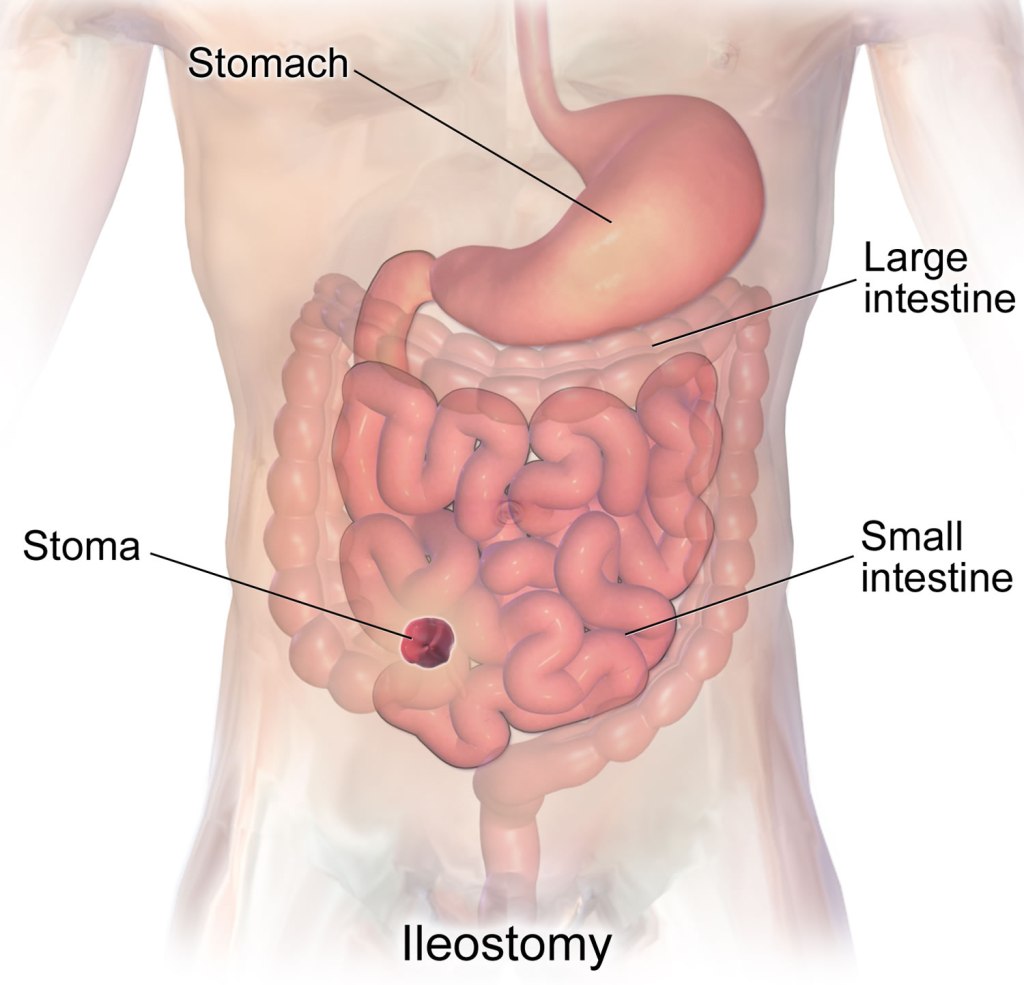
Doctors may opt for a temporary ileostomy if your colon doesn’t function properly and is in the need of treatment. In such cases, the colon should rest for a while to heal properly. An ileostomy allows the stool to bypass the colon and leave the body through the stoma.
As for the permanent ileostomy, the procedure is the same, except for the bypassing colon part. A permanent procedure involves the removal of the colon entirely. As a result, the patient has to learn to live with a bag to collect the stool and discard it in the right place at the right time.
Reasons you may need an ileostomy
Ileostomy might become crucial if you have an intestine problem that you are unable to solve with the help of medication. In most of the cases, it’s the inflammatory bowel disease (IBD) that leads a person needing an ileostomy surgery. This condition often results in blood and mucus in the stool, bodyweight loss, poor nutrition, and abdominal pain. Other reasons may include rectal or colon cancer, familial polyposis, intestinal birth defects, accidents resulting in intestinal injuries, and Hirschsprung’s disease.
Preparing for the procedure
First of all, you need to consult with your doctor and tell them about your medical condition, and medications and supplements that you take. The doctor will give your instructions regarding your diet and lifestyle changes. And you will be advised not to eat and drink anything twelve hours before the surgery.
Procedure
Before the procedure, the surgical staff will administer general anesthesia to make the surgery pain-free. A standard ileostomy procedure involves a small incision, which later serves as the point of the stoma. The surgeon then disconnects ileum from the colon and pulls it out through the incision. The surgical staff either bypasses the colon to let it heal over time or simply removes it from the abdomen if it is untreatable. The incision on the abdominal wall is sutured to fir the size of the stoma.
After the procedure
One thing that you are going to have to keep in mind is that you will not feel any urge to excrete in response to bowel movements. It means that stool evacuation is going to be unintentional every time. You need to manage this evacuation with the help of an ostomy bag that will connect to your stoma. This situation also brings up the need to take care of your stoma and the skin around it. you can learn about ostomy care from your doctor or ostomy care nurse.
 Hayden's Health Concepts